
Myopia Control
Myopia (short-sightedness) is becoming increasingly common worldwide, especially in children. In recent years, management has shifted from simply correcting vision with glasses to actively trying to slow down the progression of myopia. New research and treatments in 2025 focus on protecting long-term eye health and reducing the risk of complications such as retinal detachment and glaucoma.
One of the most well-supported treatments is Orthokeratology (Ortho-K). These are rigid lenses worn overnight that temporarily reshape the cornea, allowing clear vision during the day without glasses. More importantly, they also help slow myopia progression. Clinical studies show that orthokeratology can significantly reduce eye growth over time, making it one of the more effective non-drug treatments available. Soft contact lenses designed with “multifocal” optics are also used to control how light focuses on the retina, which helps slow progression.
Another important development is the use of low-dose atropine eye drops. These drops are applied nightly and work by slowing the elongation of the eyeball, which is the main cause of myopia progression. Studies have shown that even very low concentrations, such as 0.01%, can significantly reduce progression, while slightly higher doses (e.g. 0.025%–0.05%) may have a stronger effect in some children. Although not a cure, atropine is now considered a key first-line option in many cases.
New spectacle lens designs have also emerged as a simple and non-invasive option. These lenses, like MiyoSmart, use special optical designs to reduce peripheral defocus, which is thought to drive eye growth. Clinical trials have shown that these lenses can slow myopia progression, making them a good option for younger children or those not ready for contact lenses.
A more recent and innovative treatment is repeated low-level red-light (RLRL) therapy. This involves short sessions of exposure to low-intensity red light using a specialised device. Recent studies suggest that this therapy may be one of the most effective methods for slowing eye growth, even outperforming some traditional treatments in the short term. However, it is still relatively new, and long-term safety and availability are still being evaluated.
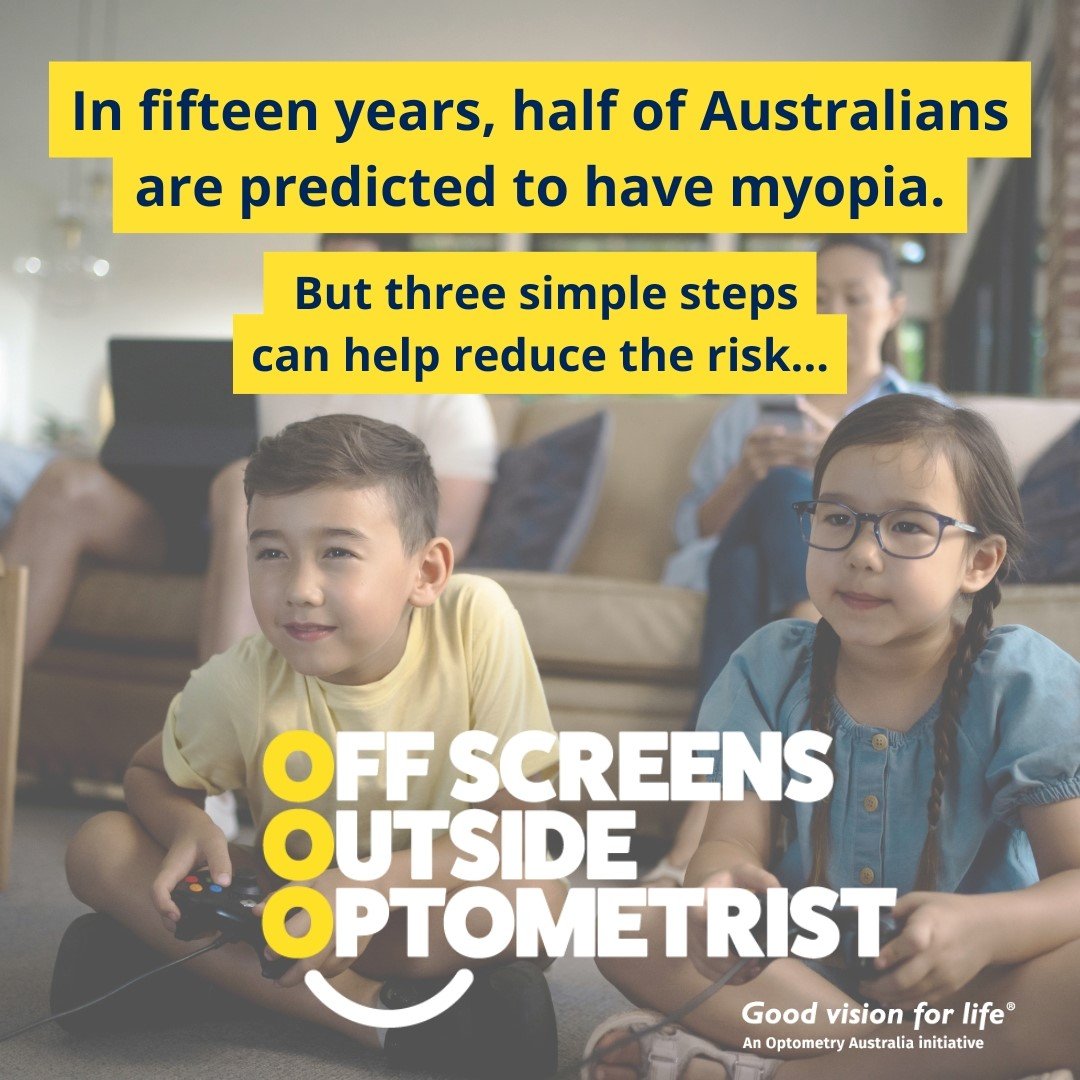
Lifestyle factors remain essential. Increased outdoor time has been consistently shown to reduce the risk of developing and worsening myopia, while excessive screen use and prolonged near work may contribute to progression. We recommend the following basic visual hygiene practices:
The 20/20/20 Rule: Every 20 minutes, look at something 20 feet away (6 metres), for 20 seconds.
Do not hold an object closer than the Harmons Distance. This is the distance between your closed fist and elbow.
Have good lighting, even when using a screen that is backlit.
Spend at least 2 hours per day outside