
Orthokeratology (Ortho-K) Fitting in the Sutherland Shire
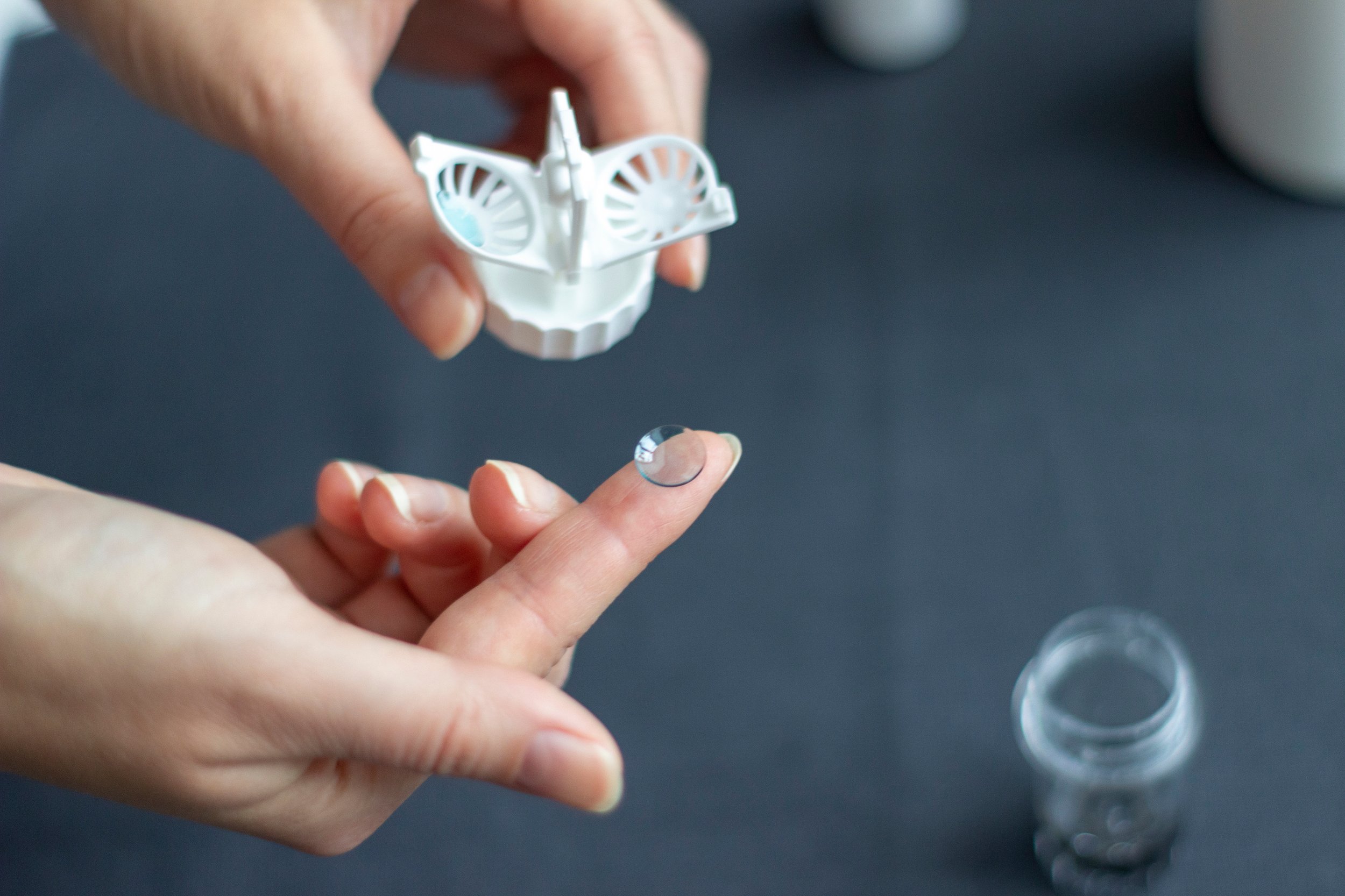
Orthokeratology, commonly known as Ortho-K, is a specialised form of contact lens correction in which custom-designed rigid contact lenses are worn overnight to gently reshape the front surface of the eye.
The lenses are removed after waking, allowing many patients to see clearly throughout the day without wearing glasses or contact lenses.
At Visionworks Optometrists, we provide comprehensive orthokeratology fitting in the Sutherland Shire, including detailed corneal assessment, customised lens fitting and ongoing monitoring.
What is Orthokeratology?
Orthokeratology uses specially designed rigid gas permeable contact lenses that are worn while you sleep.
Unlike conventional contact lenses, which correct vision while they are being worn, Ortho-K lenses temporarily alter the shape of the cornea. When the lenses are removed in the morning, this change in corneal shape corrects the eye's refractive error.
The effect is temporary and reversible, so the lenses generally need to be worn regularly overnight to maintain clear daytime vision.
Ortho-K is most commonly used to correct short-sightedness (myopia).
Ortho-K for Myopia Control in Children
Orthokeratology can provide more than freedom from daytime glasses or contact lenses.
In children with progressive myopia, Ortho-K is one of the evidence-based options available to help slow the progression of myopia and excessive eye growth.
This is important because higher levels of myopia are associated with an increased lifetime risk of several eye conditions.
For children, we therefore consider two separate objectives:
Clear vision today and reducing the rate of myopia progression over time.
Ortho-K may be considered alongside other myopia-management options depending on the child's prescription, age, eye health, rate of progression and individual circumstances.
Who is Suitable for Orthokeratology?
Ortho-K can be suitable for both children and adults.
It may be particularly appealing to people who:
Have myopia and would like freedom from glasses during the day
Play sport or participate in activities where glasses can be inconvenient
Find conventional daytime contact lenses uncomfortable
Have children with progressive myopia
Would prefer a reversible alternative to refractive surgery
Want clear daytime vision without having to insert contact lenses each morning
Not every prescription or corneal shape is suitable for Ortho-K. A detailed assessment is therefore required before determining whether treatment is appropriate.
What Happens During an Ortho-K Fitting?
Orthokeratology fitting is considerably more detailed than a standard contact lens fitting.
At your initial assessment, we examine your vision, prescription, eye health and suitability for overnight contact lens wear.
A particularly important part of the assessment is corneal topography.
Corneal topography creates a detailed map of the shape and curvature of the cornea. These measurements allow us to select and customise an Ortho-K lens according to the individual shape of the eye.
Once the appropriate lenses have been selected, you will be taught how to insert, remove, clean and care for them safely.
What Happens After the First Night?
Ortho-K requires ongoing assessment, particularly during the initial fitting period.
After beginning treatment, we monitor how the cornea responds to the lenses, how well the lenses centre overnight and the quality of vision achieved during the day.
Corneal topography can be repeated to examine the treatment pattern produced by the lens.
Depending on the response, the lens parameters may be adjusted to optimise vision, comfort and lens positioning.
Once a stable result has been achieved, regular reviews remain important to monitor eye health, vision and lens condition.
How Quickly Does Ortho-K Work?
Many patients notice an improvement in their unaided vision after the first few nights of wear.
The time required to achieve stable vision varies according to the prescription, corneal shape and individual response to treatment.
During the initial fitting period, vision can fluctuate as the cornea adapts. Your optometrist will monitor this process and determine whether changes to the lens design are required.
Is Orthokeratology Permanent?
No. One advantage of orthokeratology is that the treatment is reversible.
The cornea gradually returns towards its original shape when Ortho-K lens wear is discontinued. The vision-correcting effect therefore needs to be maintained through ongoing lens wear.
This distinguishes Ortho-K from permanent procedures such as laser refractive surgery.
Is Ortho-K Safe?
Ortho-K has been used internationally for many years and can be a safe form of vision correction when patients are appropriately selected, lenses are correctly fitted and appropriate hygiene and follow-up procedures are followed.
However, Ortho-K involves overnight contact lens wear, and contact lens wear carries risks, including infection.
Good hand hygiene, appropriate lens cleaning and disinfection, avoiding exposure of lenses to tap water, following the recommended replacement schedule and attending regular reviews are therefore important parts of safe Ortho-K wear.
Patients should seek prompt professional assessment if they develop significant redness, pain, light sensitivity, discharge or a sudden deterioration in vision.
Ortho-K vs Regular Contact Lenses
Conventional contact lenses correct your vision while the lens is on the eye.
Ortho-K works differently.
The lenses are worn overnight and removed in the morning. The temporary change in corneal shape then provides the vision correction during the day.
For suitable patients, this can mean going through school, work, sport and other daily activities without needing glasses or daytime contact lenses.
Orthokeratology in the Sutherland Shire
Successful Ortho-K treatment begins with careful patient selection, accurate measurement of the cornea and an appropriately designed lens.
At Visionworks Optometrists, we provide orthokeratology assessment and fitting in the Sutherland Shire for children and adults.
For children with progressive myopia, we can also assess Ortho-K as part of a broader myopia management strategy, with ongoing monitoring of their vision and myopia progression.
If you or your child are interested in Ortho-K, an initial assessment can determine whether orthokeratology is suitable for your eyes, prescription and visual needs.
Contact Visionworks Optometrists to arrange an Orthokeratology consultation in the Sutherland Shire.